Tuesday, September 28, 2010

The New South

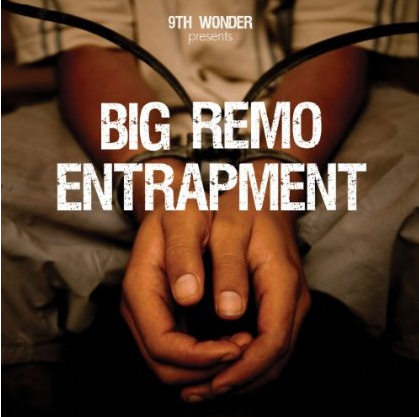
Big Remo - 9TH Wonder Presents Big Remo: Entrapment

Release Date: September 28, 2010
Label: It's A Wonderful World Music Group


I remember reading an interview with Michael Phelps during the 2008 Olympics and they asked him what he listened to when he was waiting to race. He said he liked Southern hip-hop "mostly Lil' Wayne." As many of you may know, I look often to Michael Phelps for musical analysis and criticism. So, in a sense, this is how it was explained to me what "Southern hip-hop" now represented.

Gone were the days of Nappy Roots and Outkast. This isn't a knock on Lil' Wayne or anybody else, but the South used to represent something a little different. It was more arty and more hard work. Andre 3000 was flashy in that Buckhead fashion team kind of way, but Southern hip-hop came to typify blue collar rap. New York and Los Angeles were turning out stuff from the ghetto and talking about it. Those dudes from the South were a lot from the ghetto, too. But, there wasn't as much glamorizing thug life as wanting a good job. Positive-tip might've actually started down there, even though that's not where the credit goes. Now, the winner of 700 gold medals had reclassified the region.

Big Remo's new release starts to bring it back. Produced by 9TH Wonder (another North Carolina product), the album restores the drive that Little Brother was so apt to put out there. From go, Remo raps about surviving. About how he's been in the street and he's still ambitious. Not Tony Montana ambitious, like legitimate ambitious. That he's gonna make it up one way or another, but "new chicks tired of this thug male." And it's mostly stories. Southern hip-hop came up not too long after New York made the art apparent, and the originals told tales like Slick Rick. Mainstream rap has seemingly taken a turn from this-is-what-happened to this-is-what's-gonna-happen-bitch, but Remo keeps it old this way. His way of telling about the neighborhood is somewhere between Biggie and Scarface, which puts him in line with MCs like One Be Lo and reaching for those like Brother Ali. And 9TH uses his still considerable talent (a lot of listeners wrote him off after his track on The Black Album) to back the stories up. This ought to be expected from the Carolina history professor. There are a few fun songs on there, too. Remo calls "Woop Woop" a "barbecue song," but there's just some element missing.

And that's really the weakness of the album: it's incomplete in some way or another throughout. Every time a song really gets going, it seems to drop you just as you're about to get out of your seat. Remo has a strong voice to push good lyrics, but his cadence reminds you of the upstart MC you see walking down the street with his headphones on just spitting line after line, all force and no variation. You think he might be pretty good with the right producer and you hope he finds him. On the whole, though, it's the featured vocalists who save the album. Which may be a bad sign for Remo, but keep in mind: he's just coming around (maybe with his headphones in) and it was his idea to get back to the South.

We'll see if you can swim to the next one.

Tuesday, September 21, 2010

Stop wishing, Ahmad.

John Legend & The Roots - Wake Up!

(***Every Tuesday there will be a new album reviewed instead of the typical "where the old album fits into my life" thing; should that information ever become apparent for these new albums, it will be added then***)


A little while back (by the grace of a great birthday present), I was finally able to go see a show at Red Rocks. According to my cousin, "It could be a sociopath banging garbage cans with a golf club and, if it was at Red Rocks, it would be the greatest show you'd ever seen." Maybe true, but it's safer to see Buddy Guy, Al Green, and B.B. King.

The show was outstanding. Buddy Guy was what he is every other night at Legends: kind of gross for an old guy and still managing to teach Jimi Hendrix things. Al Green about changed my life. I could go on for pages about why his was one of the best performances I've ever experienced. But, suffice it to say that he was singing his songs (and did David Ruffin in there at least once) and, other than consistently saying hello only to "Denver!"and "Lakewood!", showed few signs of aging.

King was a different story altogether. Let me say first off that it's unforgivable that I hadn't seen him before that night, despite his being the most prolific tourer ever, and that I am grateful I got to before he's gone (there's no indication he'll stop playing music while he breathes). But, we're a long way from the Cook County jail. High (...er...) lights included: forgetting at least 30%of his lyrics, slurring 40% of the ones he remembered, and threatening to stab people in the audience two times. Rough to watch. But, he can still slide around the guitar reasonably well (by the standards he set), and his band is top notch. And that's THE thing.

Not B.B.'s weird, promised knifings. His band. And Al Green's band. And Buddy Guy's. It wasn't too long ago (you can find a substantial amount of 80's youtube videos) when amazing support bands were a requirement for a proper stage entrance. And the headliner would banter with them, or look their way and smile in the middle of a solo. To see that dynamic in that rocky, perfect-acoustics setting was something I've got to recommend.

But, when? On the way home (actually, a couple times while we were still at the venue) we talked about what happened to "the band." What happened to the showmanship? The entrance? How can I have this experience when Al Green wants to play places with less suburbs to remember, and B.B. King will likely be in the audience at Cook County soon? This morning you got another chance. Wake Up! is here.

I've always felt that Chicago and Philadelphia had a connection. Maybe it was because my good friend in high school was from Philly. Or because the same thing happened in college. And then again in college part II. Or maybe because, until pretty recently, we both had sports teams that people didn't much care for, and they lost a lot. Or because both cities hate New York. Whatever the reason, I often thought they might join forces. Chicadelphia, it would be called (easy, Philly...we're only first because Philicago sounds like a realtor who advertises on bus stop benches). And the combined population would reclaim the #2 spot in the country (gonna have to annex some more sprawl, cheaters). And the city would be to music what New Orleans was in the early jazz era. The uniqueness of Philadelphia (Hall and Oates, Ween, Dr. Dog, Billy Paul) and the Chicago concern (Common, Diverse, Copperpot, every blues musician who sang about struggle) would create a style that would probably be a little throw-backy, a little issue-driven, and really, really good.

John Legend and The Roots just did it. Hello, Chicadelphia. Meet the mayors. And they brought the band.

Legend shirked extra dancing for a piano. The Roots said, why not have a ton of real instruments in addition to a DJ? Wake Up! takes the traditionalism to it's logical next step. Both artists refuse to be shy about their roots without sacrificing ingenuity. From the first rattles on the ride, built up with a jumpy little organ and some classic vocal runs, through the pop of the horns and slapped electric bass, the first track is an arrival. It's hard to imagine a more perfect background for an announcer to introduce the crowd. That is, until you get to track two, which could definitely serve the same purpose. This was an album built to be toured on.

For the most part, Legend lassos his inner War, and Eric Burdon might actually wish he had this much emotion. The format could be described as funk-soul with frequent mix-ins of Black Thought's rap and some female back-ups. It's contemporary enough to be interesting, but most of this stuff could play on the radio 40 years ago. Especially "Wake Up Everybody," which features Melanie Fiona's Tammi Terrell to Legend's Marvin Gaye. Fellow Chicagoan Common seems to get caught up in the 70's spirit and has a melody in his voice that lightens his typically grave tone.

The one real divergence from the formula is a song called "Humanity." It's coincidentally the best track on the album. As ?uestlove proves that there is no beat beyond his ability, Legend makes his case as a reggae intoner. The result is the song Freddie McGregor was trying to put down when he recorded "Big Ship." Although "Humanity" is different enough to maybe even sound out of place, there is nothing about the song that suggests the group is trying to be artsy. It's less our-musicianship-knows-no-limits and more hey-it'd-be-fun-to-play-a-reggae-song.

And there's a message to the entire project (remember when music sometimes had a message for the group instead of the individual?). Yeah, for all intents and purposes it's just "Hey, let's get along and make the world right," but it's still pretty refreshing.

Don't expect more of the same on Wake Up! from either John Legend or The Roots. This is pretty close to a concept album. But, it's solid songwriting and it's catchy. And it paves the way for a hybrid city that values it's past, likes a performance, brings something new, and scares those two other cities a bit.

Thursday, September 16, 2010

Fair Prince

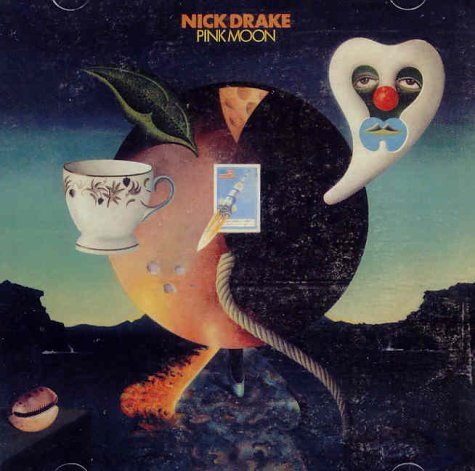
Nick Drake - Pink Moon

Weather: Warmer
Time: After something (physical stress; people left the barbecue; living somewhere for a while)
Action: Decompression (sitting, driving)


I'm not very good at rock climbing. In fact, it's something I probably should not deign to do without health insurance. I do it only occasionally enough not to risk getting better. Normally I reject anything I'm not immediately good at. (How do I learn new things? Usually by being forced.) But, there's something about climbing stuff that outweighs any ego shot. If you didn't climb stuff when you were little -- be it trees or fire escapes -- well, you were clearly dealing with some grave social issue and I hope that you were able to solve it. If you don't climb as an adult, it's likely you recognize your body's new limitations (or your neighborhood's new impression of you monkeying up an external pipe to get stuck on a roof across the alley; sorry, Mike). Whatever your reason for not doing it then, or not doing it now, it can't be because you're not curious what's up there. And it can't be because you see no value in conquering something in the most basic way.

I went out to climb yesterday, late afternoon, and I didn't do much conquering. Stretching, yes. Falling, you bet. Cheating to get to the top on occasion? (Listen: it probably feels better to do it honestly, but I know it feels good as long as you're looking down. Even if you did skip a couple holds because, with orangutan arms, you could.) I did just enough to feel different than a tin man, and get my arms and legs weak. And, because I think infrequently, a got a couple good 75-yard sprints in with the dog coming down the hill. By the time we got to the truck, I regretted a lot of the decisions I'd made in my life. But, I was happy. I may not have wanted to talk to anyone (for the struggle of it), but I was glad they were there. We just beat the sunset down, and it was just asking for windows down on the way home.

Pink Moon is, frankly, the greatest pure folk album of all time.

That sentence belongs by itself. Before all the Dylan and Guthrie armies fall in, just take a deep breath. Dylan had, generously, 3 actual folk albums (The Times They Are a-Changin', the Freewheelin', and Bob Dylan). I say generously, because, although there was no secret that Dylan loved Guthrie, he was as bluesy as anything. (Don't believe it? Check out Blind Lemon Jefferson, then listen to "Corrina, Corrina".) And Woody was a folk hero; practically invented the movement in America. But, you just can't tell me "This Land is Your Land" is on many stereos these days. Woody moved a nation, but his posters are up in dorm rooms for his activism, not his listenability.

But, didn't Nick Drake work with blues, too? Sure did. Listen to just about all of the transition stuff on Family Tree. But all those bent notes and little embellishments are conspicuously absent from Pink Moon. It's even more folky than Drake's other albums (read: yes, even more than the mystic flute on Bryter Later). The stories and longing, mostly without accompaniment, are suitable for firesides and vast expanses.

It might win even if Dylan dropped the 7's, because it's remarkable from start to finish. Every single track is simple and good. The originality is prolific. There are, by my count, seven different tunings spread among eleven songs. This was probably maddening for live audiences (by common account, Drake rejected the idea of toting multiple pre-tuned guitars, favoring instead making the crowd wait between songs while he tuned his one), but on a record it's seamless. I don't know what music as a textile would look like (or whether I should go throw up because I just typed that), but I bet Pink Moon would make a fine blanket.

Seriously, use it when you're wrecked, but wrecked with promise. The title track is interestingly conclusive for a beginning (this might actually be the song that got me so sold on driving to this album; it was in a VW commercial) and it's perfect for driving away from something, whether it be a night baseball game in which your team got shellacked or a last beer on a good night. For a 23-year old, Drake had an impressive capacity for reminiscing through words that highlighted sadness, and then picking them up, showing the bright side, with his guitar. In other words, the lyrics might make you dwell on the final score, but the music should remind you of laughing with the second baseman, or at least that you're playing the worst team in the league next week.

For the confidence disinclined, Pink Moon can be dangerous. Part of what makes the album such a nice wrap to a day is that Drake is doing huge things without shaking anyone. But, if you haven't done anything, "How can something so simple be so pretty" can turn into "I can't even do something pretty when I try to be complex." Although it doesn't have the radio single potential of many of the other tracks, "Know" sums up the project and its value. Here, Drake uses only four total notes on his guitar, and works his voice in with a pain Eddie Vedder clearly paid attention to writing the soundtrack to Into the Wild. He's not changing the world, or necessarily even influencing music to come, but he's conquered the four notes, and made it work gracefully or not.

I've had this record in my ears on at least five occasions of leaving. Moving from my college town went unnoticed on the news, but I put a mark on it in a common way (like 28,000 other students). Flying back from an ill-advised trip (which included sleeping on Faneuil Hall's lovely benches in October), I didn't have much but a story to show for it, but I took a shot to see what would happen. Sometimes it's about getting to the top, no matter how short the rock is or which way you overuse your arms.